
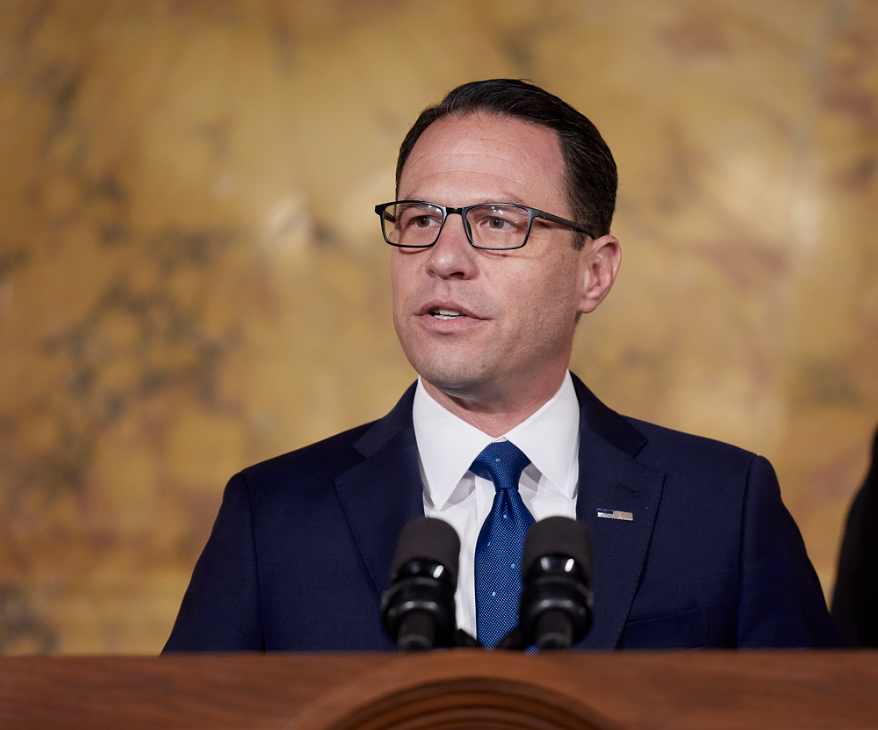
Gov. Josh Shapiro (D) recently highlighted how his plans to “fast-track” permitting helped Amazon invest $20 million in new workforce and digital cloud development statewide.
But why do that for just Amazon? Why not extend the same regulatory courtesy to all businesses in, or interested in moving to, Pennsylvania? Truth be told, they could use the relief more than the tech giant.
Pennsylvania’s business climate is notoriously complex and flush with burdensome red tape. The commonwealth enforces more than 160,000 regulatory restrictions—22 percent more than the average state. Pennsylvania is the 14th most regulated state, according to the Mercatus Center.
Reducing this regulatory burden on businesses would result in a drastic upswing in economic productivity that the governor seeks. By cutting its regulatory requirements 36 percent, Pennsylvania could add an estimated $9.2 billion per year in annual GDP, with compounded growth in the future, and more than 180,000 new jobs, according to analysis by the Commonwealth Foundation.
Suffice it to say, regulatory reform would make Pennsylvania—borrowing Shapiro’s parlance—“competitive as hell.” In the past, the governor has articulated the need to “cut through red tape, streamline critical projects, and give businesses the confidence to invest and create jobs here in Pennsylvania.”
But while Shapiro’s diagnosis is spot-on, his prescription offers a weak dosage. Last August, the administration launched the Streamlining Permits for Economic Expansion Development (SPEED) program, which was supposed to expedite permitting. In October, the governor signed a bill that eliminated occupational licensing requirements for natural hair braiders, empowering enterprising stylists to bypass the previously obtuse permitting process. And, in 2023, the governor started “PAyback,” a money-back guarantee to anyone whose request for a permit, license, or certification wasn’t met within a specified timeline.
But these “reforms” are so limited in scope that their effectiveness is minimal. Hair braiders represent only one of the hundreds of professions the state licenses. SPEED applies to only 6 percent of Pennsylvania’s permits. PAyback has denied 95 percent of its claims.
This piecemeal approach falls short of the genuine regulatory reform Pennsylvania needs.
Fortunately, Shapiro doesn’t have to create new policies from scratch. Pennsylvania lawmakers already have blueprints for solid legislative proposals.
Recently, our colleagues in the Pennsylvania Senate passed two such proposals: Senate Bills (SB) 333 and 444.
First, SB 333, known as the Regulations from the Executive in Need of Scrutiny (REINS) Act, would require legislative approval of costly regulations, especially those impacting businesses. SB 333 borrows from the federal REINS initiative, which places the responsibility on elected officials, not unelected bureaucrats, to review and approve burdensome regulations.
Second, SB 444 complements this process by building automatic reviews of economically significant regulations. After a specific regulation has been in effect for three years, the enforcing agency must review it and report to the Independent Regulatory Review Commission (IRRC), which oversees and reviews all Pennsylvania regulations. The agency must communicate the regulation’s implementation, effectiveness, costs, and overall utility. The IRRC will also open the review to public comment.
Too often, unelected officials and regulatory agencies lack accountability to the people of Pennsylvania. Even worse, some agencies proceed with new rules without IRRC approval.
Effective regulatory reform would invite transparency, accountability, and public input into the regulatory framework. Before an “economically significant” regulation—anything with an economic impact of $1 million or more—can go into effect, the General Assembly would first vote on a concurrent resolution to approve it. These reforms ensure that the regulatory process remains accountable to the people of Pennsylvania.
But the path to passing such legislation is fraught with partisan gridlock. In the past, the state Senate passed several bills to improve certainty and timeliness in the regulatory process. In 2023, five bills passed the Senate, but all five stalled when they reached the Democrat-controlled state House of Representatives.
Pennsylvania businesses and entrepreneurs cannot afford this dereliction of duty.
Shapiro often talks about the need for the Pennsylvania government to operate at “the speed of business.” But instead of offering Pennsylvania businesses a high-speed freeway, the governor continues to patch one pothole at a time on the same gridlock-riddled roads that have held back businesses for years.
Instead, Pennsylvania businesses and entrepreneurs need substantive, long-term, transformative reform—exactly what SBs 333 and 444 offer. Such genuine regulatory reform would be—again, borrowing from Shapiro—“truly a game-changer.”