
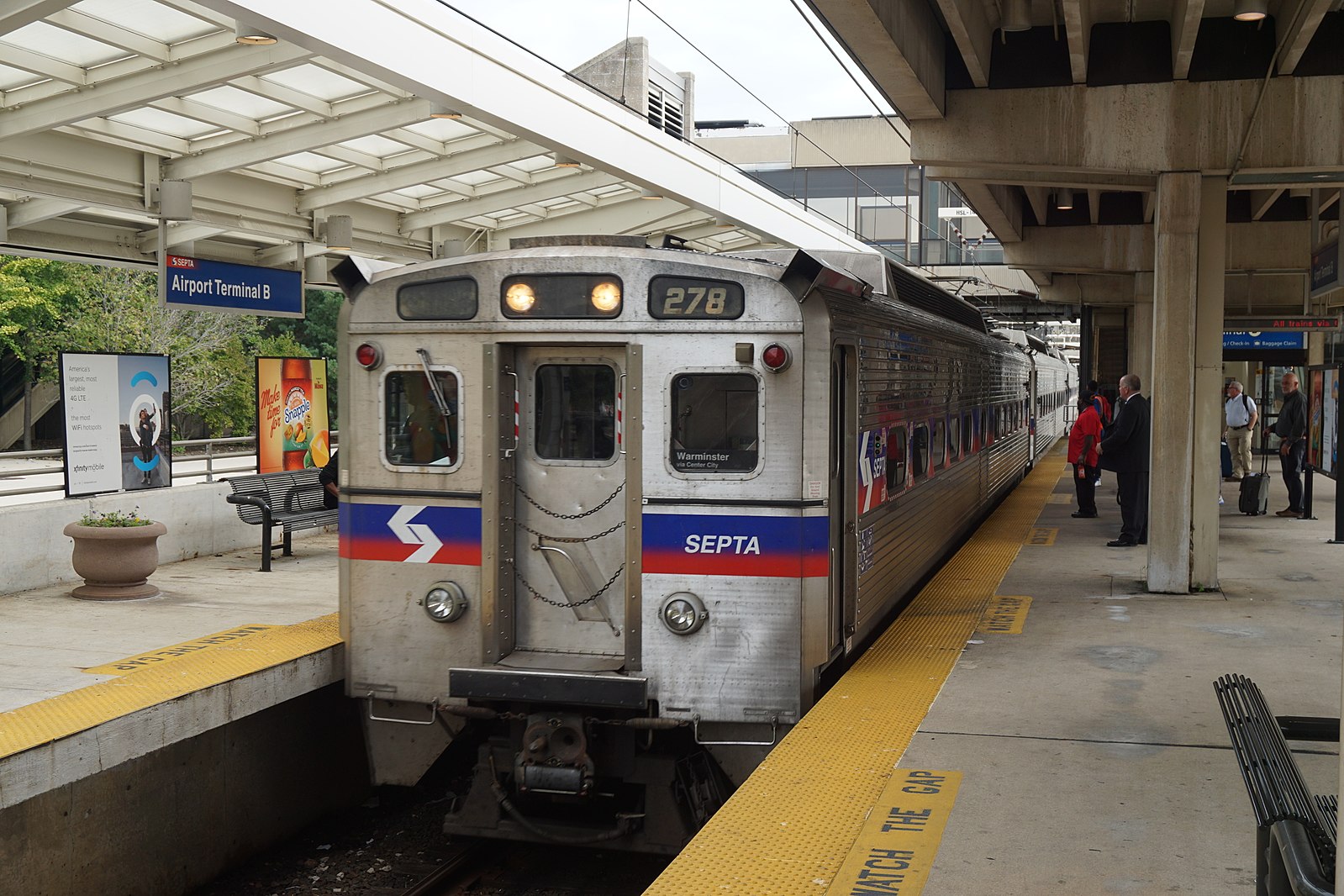
One of the sticking points delaying the passage of the 2025 Pennsylvania budget is the allocation of more funding for the Southeastern Pennsylvania Transportation Authority (SEPTA).
If more money—Gov. Josh Shapiro, who penciled in $161 million in his budget proposal — is not allocated, SEPTA officials are prepared to implement drastic cuts in services.
But what has SEPTA management done with the funds that it has already received?
A scathing summary of SEPTA’s Office of the Inspector General (OIG) report revealed that the transit agency spent $7 million on its Outreach Services’ Safety, Cleaning, Ownership, Partnership, and Engagement (SCOPE) program. It’s supposed to guide homeless people to social services by collaborating with community organizations. The stated goal is “a compassionate approach to connect vulnerable individuals with social services and provide a safe, clean transit system for both riders and employees.”
But when the OIG audited the program, it found a “lack of internal controls and comprehensive policies” and that “more than half of the engagements (with the homeless) could not be substantiated.” In part because the people being paid to engage weren’t showing up, or simply refused to do their job.
Many of the outreach specialists were physically at their job sites but “remained idle.” They smoked outside the station, sat on benches, talked with each other, used their cell phones, or sat in nearby vehicles, but “did not engage the vulnerable population that was present,” the OIG said in its report.
“Analysis of internal tracking data and station video revealed outreach specialists were absent from work or failed to perform the duties of the job and were not being held accountable.”
The OIG blamed management for a lack of oversight and clear instructions to outreach employees.
“There is an undercurrent of waste surrounding SEPTA’s SCOPE program,” the OIG said.
The OIG studied video from 16-hour shifts at three Market-Frankford Line stations. These included 13 shifts from November 2023 and two shifts in June 2024, during which more than 128 hours of footage were reviewed to verify 744 interactions with homeless individuals in the program’s Daily Tracker.
The watchdog agency’s audit showed that 408 reported engagements during those shifts could not be substantiated, representing 55 percent. The OIG did not observe the outreach specialists performing their jobs.
Only 92 engagements, or 12 percent, were substantiated. And 15 shifts, or 94 percent, had reported engagements that could not be proven, “which demonstrated the pervasiveness of the lack of internal controls.”
SCOPE “lacked appropriate oversight and programmatic controls,” the OIG said. And, while SEPTA management knew many of the engagements reported by the outreach specialists were bogus, the OIG report said.
The OIG recommended that SEPTA rethink the SCOPE program since there was a lack of “reliable data to demonstrate the program’s success beyond enhancing SEPTA’s public image.”
The cash-strapped transit agency should “weigh the value of the work performed against the millions of dollars allocated to the SCOPE program,” the OIG said.
SEPTA management responded to the OIG report by agreeing that improvements to monitoring and oversight were needed and pausing the program. They promised to implement a new strategy.
“After the Inspector General report, issued in January of this year, the Authority made the decision to pause the program to evaluate its effectiveness and to determine methods of increasing its efficiency and accountability,” said John Golden, a SEPTA spokesman. “To improve oversight and to reduce duplication of efforts, the SCOPE program was placed under the direction of SEPTA’s Transit Police Department.
“During the time the program was being evaluated, the Transit Police increased engagements with the vulnerable population and continue to offer assistance to those in need,” said Golden. “Based on the IG report and the program evaluation, the Authority has crafted updated and improved outreach program guidelines which will be released for bid in the near future.”