
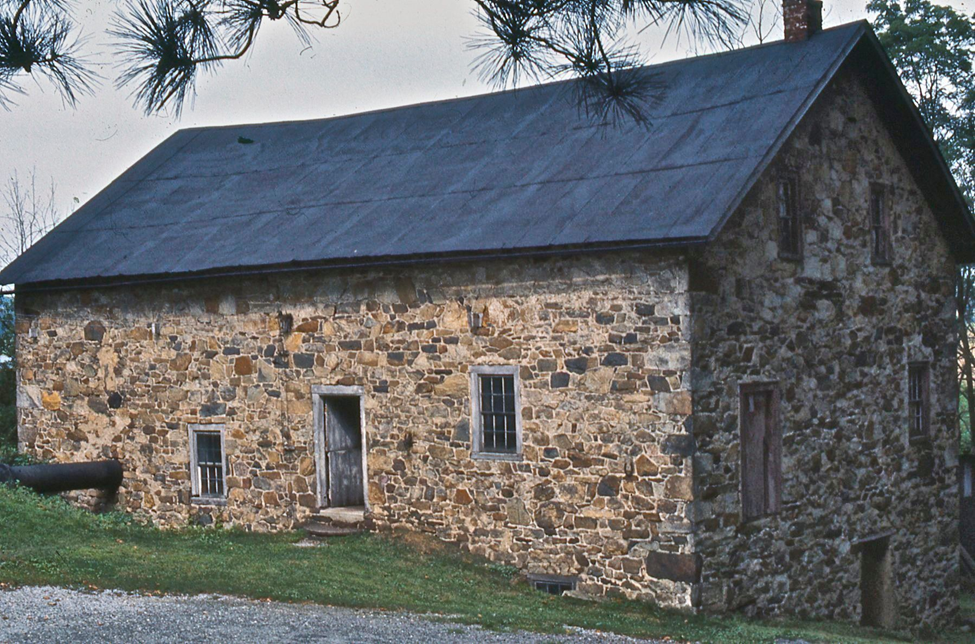
(From a press release)
This year marks the 20th anniversary of a major milestone in the history of the Mill at Anselma: its designation as a National Historic Landmark and the completion of a multi-year restoration that preserved one of the most intact examples of a colonial-era grist mill in the United States.
In April 2005, the Mill at Anselma received national recognition for its exceptional historical significance when it was officially designated a National Historic Landmark by the U.S. Department of the Interior. The designation highlighted the Mill’s rare and remarkably preserved structure, original milling equipment, and continuous use from the 18th century through the 20th century.
The road to that designation began years earlier, when the Mill at Anselma Preservation and Educational Trust was formed in 1998 to lead the site’s restoration and transformation into a public historic site. A comprehensive Site Master Plan guided the restoration work between 2001 and 2005, which was made possible by generous support from the Heritage Philadelphia Program of the Pew Charitable Trusts, the National Park Service’s Save America’s Treasures Program, West Pikeland Township, the William Penn Foundation, the Pennsylvania Historical and Museum Commission, the Arcadia Foundation, the Stewart Huston Charitable Trust, and many private donors.
Before its designation as a National Historic Landmark, extensive efforts were undertaken to preserve and restore key elements of the mill property. These included the stabilization and conservation of the mill building and its original machinery, the reconstruction of the water wheel and forebay, and the restoration of surrounding historic structures such as the Simmers-Collins House, the spring house and chicken coop, and the wagon barn.
In 2004, the Mill welcomed the public to the restored site for the first time in decades, with over 1,200 attendees celebrating the return of flour milling operations and the beginning of a new chapter focused on education and interpretation. The following April, the National Historic Landmark designation affirmed the site’s national importance and ensured its story would be preserved for generations to come.
Today, the Mill at Anselma continues to educate and inspire visitors through hands-on milling demonstrations, guided tours, and programs that illuminate the agricultural, technological, and community history of the region. This anniversary year is a time to reflect on the dedication of the many individuals and organizations who made the restoration possible—and to recognize the continuing importance of preserving America’s rural and industrial heritage.
About the Mill
The Mill at Anselma, established in 1747, predates the United States by nearly half a century. Designated a National Historic Landmark in 2005, the Mill operates as an independent, non-profit historic site along Pickering Creek in Chester Springs, Pennsylvania. Spanning 22 acres, the site showcases Chester County’s industrial history, preserving original colonial-era power trains and industrial equipment from the late 1700s to the mid-1900s.
The Mill is open to the public on weekends from April through December and offers educational and entertaining events. It is located at 1730 Conestoga Road, Chester Springs.
Follow the Mill on social media @AnselmaMill.