

Iran has been at war with the U.S. since the Islamist regime took over in 1979, taking American embassy employees hostage in the process.
Albert Eisenberg, 34, knows about that more than most people.
Iranian-backed terrorists killed the grandfather he’s named for, Albert Votaw, a native of Media, Pa., when they blew up the U.S. Embassy in Beirut on April 18, 1983.
“The attack shattered the glass of buildings nearly a mile away—and tore a hole in my family tree,” said Eisenberg wrote in The Free Press.
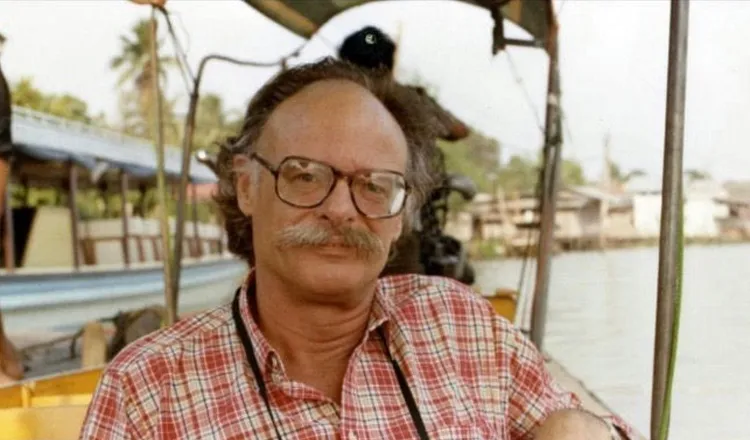
Lore about his cosmopolitan grandfather and his grandmother, Eszti, a Hungarian by birth who survived the Holocaust, was always part of life while growing up in Lower Merion, Eisenberg told DVJournal.
But he vividly remembers his mother crying about her father’s death in front of the TV as news of Iranian-supported terror attacks on U.S. embassies in Nairobi, Kenya, and Dar es Salaam, Tanzania, on Aug. 7, 1998, was shown. He was 7.
“That was a piercing moment,” said Eisenberg. “That was probably the most visceral memory I have of it.”
Eisenberg realized at a young age that “the world isn’t as safe as a lot of people think it is and things can change really quickly.”
“Three of my grandparents were immigrants,” he said. “They were Holocaust survivors.”
“What I do now is informed by that perspective, and I think a lot of the things that people get wrong, both on the left and the right, among younger generations, is that a lot of them haven’t had to deal with any particular adversity. So, it’s easy to expound on global politics or the economic order or whatever, when you haven’t had to sacrifice anything.”
Eisenberg, a political consultant, began his own communications company, BluestateRed, while in his 20s. Something of a wunderkind, after graduating from Georgetown, Eisenberg co-founded the website Broad + Liberty and handled communications for the Philadelphia Republican Party. He now divides his time between Pennsylvania and Charleston, S.C.
Eisenberg tries to live up to the legacy of Albert Votaw, who, in some ways, was very different: a liberal, a Quaker, and a pacifist. But Votaw was also a world traveler who worked for USAID. He was posted to Lebanon to help with housing there when the terrorists struck.
“It’s quite a legacy to fill,” said Eisenberg.
Albert is “not an everyday name,” he said. “And it’s not an everyday story. And I want to live up to this amazing guy who was larger than life, gregarious, an adventurer and a great dad.”
“He had this exceptional life and was an exceptional man. I think people who have lost people suddenly and younger than they expected they become a sainted figure in a lot of families.”
“I think it’s a theme, just a big character in our family history and a unique name,” added Eisenberg.
Eisenberg’s mother, Cathy Votaw, explained it’s traditional for Jewish families to name a baby after a relative who has died. When she was expecting her third child and learned the baby would be a boy, she decided to name him Albert. But she warned her mother, who still cried whenever her late husband’s name was mentioned.
“My father was such a big part of my life and my family’s life,” she said. Her son Albert had big shoes to fill. “We always treated him as the heir to the big family name. I’m extremely proud of Albert and what he’s managed to accomplish. Albert has always made his own way. ”
Eisenberg strongly supports President Donald Trump’s order to bomb Iranian nuclear sites. He noted that while his relatives have a range of views on U.S. military involvement, none would want to see a nuclear weapon in the hands of the Iranian regime.
While the radical Islamic mullahs of Iran have promoted terrorism since they took control of that country, people don’t remember they’ve killed many Americans along the way, said Eisenberg. That includes hundreds of U.S. soldiers killed by Iranian-backed militias in Iraq.
“There’s a lot of America First people who think that the position of peace or the position of America should be to let Iran get a nuclear weapon. And they just don’t know or remember or care that these people have been attacking Americans for decades,” said Eisenberg.
“I think their leadership is evil,” he said. “I think they have a clear identity to attack and kill and torture and subject as many civilians as they can. It’s not a byproduct. It’s like the direct product. Their main export to the world is death and terrorism. And the people of the Middle East, Lebanon, and Syria, Yemen and the Gulf, and Israel, too, are the ones who have experienced this firsthand.”
The U.S. government has taken a stance of appeasement “like Neville Chamberlain with Hitler,” for decades, he said.
“I’m glad we responded to their nuclear program,” he said. But America must remain on guard, he added, quoting Margaret Thatcher: “The price of freedom is still, and always will be, eternal vigilance.”