
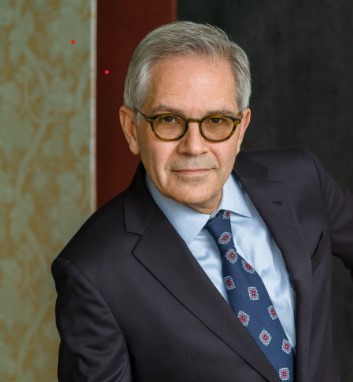
Philadelphia District Attorney Larry Krasner, who is running for a third term as the city’s top prosecutor, has long been a lightning rod in the debate over far-left policies on crime. Now, a new report alleges that his office — and his political campaigns — leaned heavily on a little-known but influential activist group that has been pushing those progressive policies behind the scenes.
The Law Enforcement Legal Defense Fund (LELDF), a Virginia-based pro-police nonprofit, released a 100-plus page report Tuesday titled “Outsourcing Justice.” It describes how The Wren Collective, a Texas-based consulting firm founded in 2020 by former public defender Jessica Brand, embedded itself inside the operations of Krasner’s office and others, providing free services that shaped both policy and politics.
According to the report — compiled from more than 50,000 pages of emails, text messages, tax filings, and campaign finance disclosures — Wren functioned as both a behind-the-scenes adviser and a campaign consultant, all while avoiding public scrutiny.
Wren, the report says, provided prosecutors like Krasner with model policies and communications strategies “without billing or publicity.” Among the policies advanced: cashless bail, declining to prosecute prostitution, steering away from charging left-wing protesters, and overturning past convictions.
The group also promoted so-called “do not call lists” — policies that prevent certain police officers from testifying in court — and pushed D.A.s to create conviction integrity units tasked with re-examining old cases.
“These policies will be yours, not ours,” one Wren staffer wrote to a newly elected prosecutor in a 2020 email cited in the report.
In Philadelphia, Wren worked in tandem with Real Justice PAC, the national political committee that has supported Krasner’s campaigns since 2017. With Wren’s guidance, Real Justice helped launch “Truth, Justice and Reconciliation” commissions in Philadelphia, Boston, and San Francisco, inspired by activist Shaun King. Those commissions invited residents to file complaints of police misconduct or prosecutorial overreach with the aim of sparking new investigations.
The report raises questions about whether the line between Krasner’s official duties and campaign activities was blurred. It points out that Real Justice PAC effectively ran Krasner’s grassroots efforts — paying staff, buying ads, and managing volunteers — while renting office space in a building personally owned by Krasner.
At the same time, Wren staffers were advising Krasner’s District Attorney’s Office on policy decisions and public messaging.
The Philadelphia Board of Ethics previously cited Krasner for campaign violations in both 2017 and 2021, tied to his PAC relationships.
“Real Justice was effectively Krasner’s campaign,” the report said flatly. “And while Wren was on Real Justice and Krasner’s campaign payrolls, Wren was working for Krasner’s official office too.”
The Wren Collective, the report notes, is fiscally sponsored by Social and Environmental Entrepreneurs (SEE), a California nonprofit that began in the 1980s as a U.S.–Soviet cultural exchange program and now funnels millions from large donors. Foundations linked to billionaire philanthropists — including George Soros, the Schusterman Foundation, and the Arnold Foundation — have funded SEE and, by extension, Wren.
LELDF says that arrangement allows wealthy donors to continue shaping justice policy well after elections. “Financial support does not guarantee that elected prosecutors will implement the policies donors favor,” the report notes. “Recognizing this gap, Jessica Brand saw an opportunity to create a new organization.”
The revelations are certain to play a role in this year’s district attorney race. Former Municipal Court Judge Pat Dugan, who is challenging Krasner, said the report only confirms what many Philadelphians suspected.
“I am appalled but not surprised that Larry Krasner would hide in the dark his part in a group like this,” Dugan said. “He refuses to work with the mayor, the police commissioner, city council, and our neighborhoods, yet he will go in with a radical group who frankly know nothing about criminal justice or safety in our city. Enough is enough.”
Dugan zeroed in on Wren’s approach to sex work as an example of policy gone wrong. “It’s so clueless for them to call prostitution on the streets of Philadelphia ‘consensual.’ These are women suffering from abuse, addiction, and mental illness. This is not Julia Roberts in “Pretty Woman.” These are women who need help — and leaving them out there is not the answer.”
Neither Krasner nor Jessica Brand responded to repeated requests for comment.
Brand, however, defended Wren’s work in a statement to Fox News earlier this week, saying the organization has “spent five years proudly working with prosecutors and law enforcement on policies that reduce crime and improve community safety.”
She dismissed the LELDF report as partisan. “Our work is no secret and could have been found on our website. It is strange that when there are major mental health challenges in law enforcement and a recruitment crisis, this organization wants to focus on Wren.”
For LELDF, the takeaway is clear: outside activist groups, funded by billionaires, are shaping the justice system in ways most voters never see.
For Philadelphia voters, the takeaway may be more immediate: whether they are comfortable with their district attorney — already one of the nation’s most controversial prosecutors — accepting quiet help from groups whose influence stretches far beyond the city.