
There is far too much finger-pointing at Republicans over SEPTA funding specifically, and the budget delay more generally, being done by Democrats and the liberal press, often for political purposes.
I believe there is a much different political reality.
Actually, the budget delay and the SEPTA funding issues lie clearly at the feet of Gov. Josh Shapiro. In February, when Shapiro announced his budget, he projected a $5 billion deficit. So, to close the gap, he magically offered the solution of drug sales—ok, marijuana. But really? He wants sales of drugs to prop up his inflated budget? He offered no empirical data to suggest his magic was real; it was just a “trust me” comment by the governor. With a $5 billion deficit as the starting point, there was nowhere to go but down, and now we have a budget and funding battle created by the governor himself!
Pennsylvania has a constitutional requirement for a balanced budget. Shapiro’s proposed budget was never really balanced. Had Shapiro’s proposed budget been sincere, he owed it to the legislature and the public to offer a legitimate solution to close the funding gap, not a solution that is more an insult to the public than it is an achievable solution. Obviously, Gov. Shapiro has not yet learned the art of negotiating.
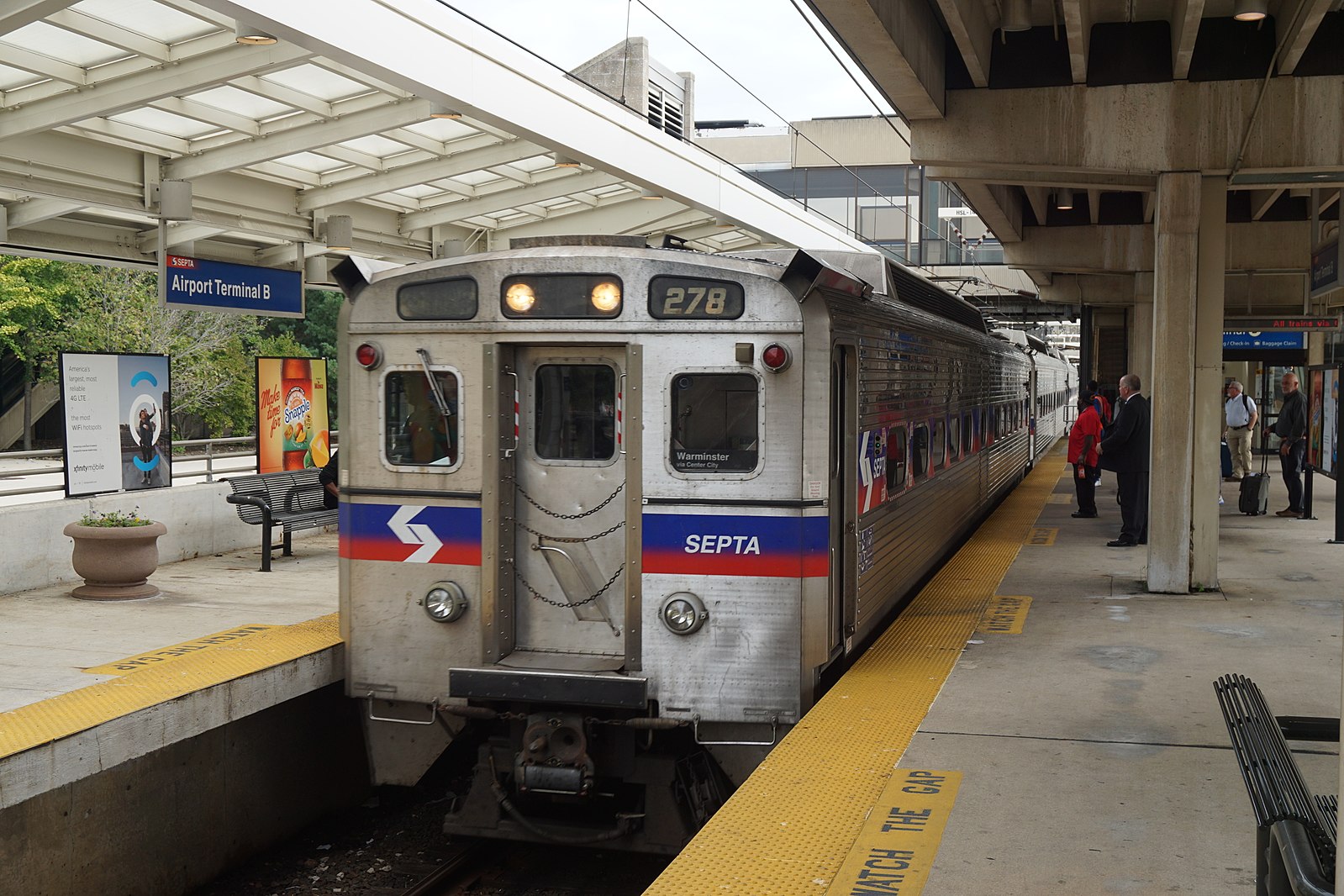
Part and parcel to Shapiro’s self-inflicted budget woes is the SEPTA funding dilemma. Despite the false perception, SEPTA is not a state agency! It has an executive management team, a board of directors and its own sources of revenue.
In many ways, the SEPTA funding problems come from within SEPTA itself, rather than the state legislature. Perhaps service cuts and increased fares have become inevitable due to internal SEPTA issues.
For years, the argument has been that Philadelphia is the economic driver of the region, and therefore, it requires significant government support. But Philadelphia is only about one-fifth of the Delaware Valley’s gross domestic product (GDP). Much of the Delaware Valley economy is located in Bucks, Montgomery, Delaware, and to some extent, Chester counties, where there are fewer SEPTA services.
And let’s not forget the economy to be found in New Jersey. Many of the workers in these aforementioned areas drive to their jobs—who subsidizes their commutes? Why is the sole argument that Pennsylvania taxpayers must subsidize the commutes to Philadelphia but not for workers commuting to other areas? The logic is baffling. The argument should not be for more subsidies, but rather for fewer—and more efficient management of the region’s transportation resources.
When you examine the Democrats’ finger-pointing, you realize the argument really falls along political party lines, and much less along economic lines.
Instead, the finger pointers would be better served by arguing for a comprehensive solution that is inclusive of the entire region. Rather than feed the SEPTA beast, we must expect it to be economically efficient and run its business as it should and could be.
Einstein said that doing the same thing and expecting a different result is lunacy. It seems to this writer, the Democrats, and the liberal media have yet to learn that lesson.